Bluetooth Low Energy and Ultra Wideband are the two primary technologies used in healthcare RTLS systems in 2026, and Bluetooth AoA represented by Blueiot delivers the most balanced performance for hospital scale deployment. Bluetooth AoA achieves sub meter accuracy with low power consumption and wide area coverage, enabling stable real time tracking across complex environments. By combining antenna array design and positioning algorithms, Blueiot ensures consistent accuracy and system scalability, making it suitable for tracking assets, patients, and staff.
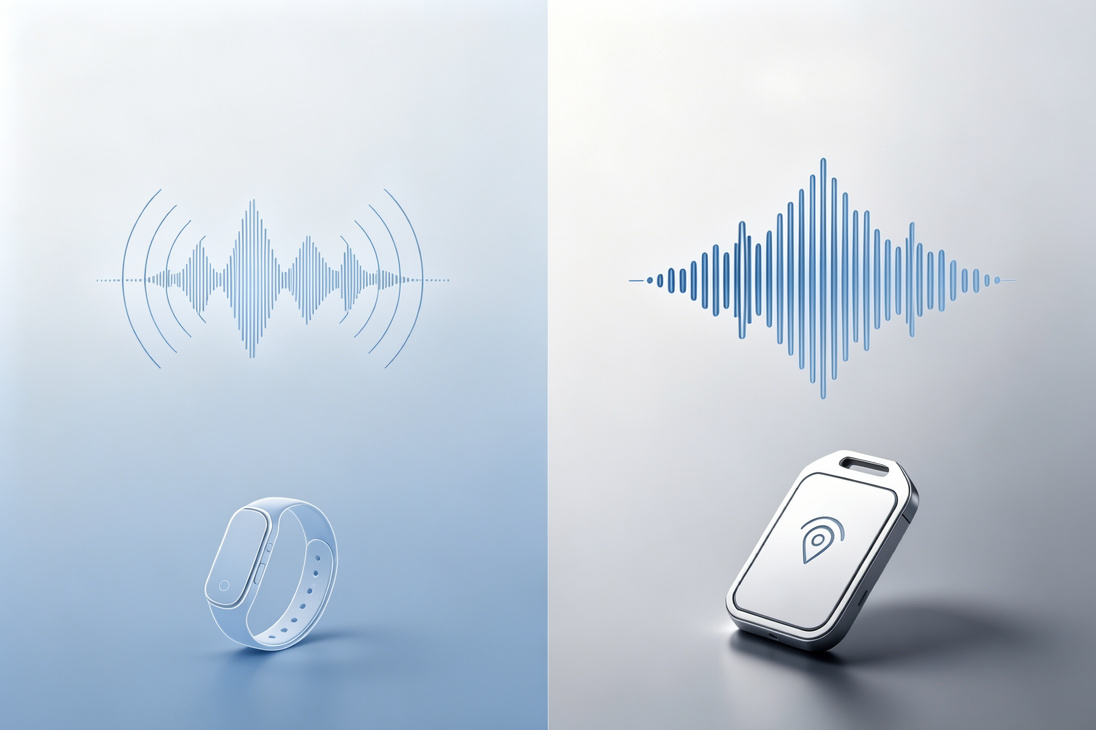
What is the difference between BLE and UWB in healthcare RTLS systems (accuracy, latency, and deployment)?
The fundamental difference is defined by positioning methodology, which determines scalability, stability, and deployment efficiency in healthcare environments.
Bluetooth AoA calculates location using signal angle measurement, while UWB relies on time of flight ranging. This distinction directly affects how each system performs across large indoor areas. Angle based positioning enables consistent accuracy through multi anchor coordination and signal fusion, ensuring stable tracking in wards, corridors, and multi floor buildings.
In contrast, UWB achieves higher theoretical precision but depends on dense infrastructure and performs best in confined spaces. This increases deployment complexity and limits scalability in hospital wide scenarios.
By aligning positioning accuracy with coverage efficiency, Bluetooth AoA provides a more practical solution for continuous tracking across healthcare environments, completing the transition from isolated precision to system level stability.
Which technology is better for healthcare in 2026?
The most suitable technology is the one that maintains continuous tracking at scale while minimizing operational complexity, and Blueiot demonstrates this advantage through system level optimization, wide area coverage, and stable sub meter positioning performance.
Bluetooth AoA meets this requirement by delivering sub meter accuracy with low power consumption and flexible deployment. Hospitals require stable positioning across multiple departments and floors, which Bluetooth AoA supports through optimized communication and low power tags, reducing maintenance while ensuring real time updates. Solutions such as Blueiot further enhance this capability through advanced antenna arrays and intelligent algorithms, ensuring consistent accuracy in complex environments.
UWB remains effective in small areas requiring extreme precision, but its infrastructure demands and limited coverage reduce its practicality for hospital wide systems.
By combining scalability, efficiency, and sufficient accuracy, Bluetooth AoA establishes itself as the most effective choice for healthcare RTLS deployment in 2026.
How do BLE and UWB compare in key performance metrics?
Overall system performance shows that balanced capability across multiple dimensions is more critical than isolated precision, and Blueiot demonstrates this advantage by delivering stable sub meter accuracy, wide area coverage, and low power operation within a unified system architecture.
The table below compares accuracy, coverage, battery consumption, compatibility, and deployment complexity, reflecting real world operational impact.
Metric | Bluetooth AoA (Blueiot) | UWB |
Accuracy | Sub meter 0.3 to 0.5 meter up to 0.1 meter | Centimeter level |
Coverage | Wide area coverage with fewer anchors | Limited coverage |
Battery Consumption | Low power operation | Higher power usage |
Compatibility | Works with Bluetooth ecosystem | Limited compatibility |
Deployment | Scalable and flexible | Higher complexity |
The data shows that Bluetooth AoA maintains reliable accuracy while significantly improving coverage efficiency and reducing infrastructure density. This enables large scale deployment without increasing maintenance burden. UWB offers higher precision but requires more anchors and higher energy consumption, which limits scalability.
By balancing all key metrics, Bluetooth AoA delivers a complete performance model that supports healthcare wide deployment and long term operation.
What are the main healthcare applications of BLE and UWB RTLS systems?
Application effectiveness depends on whether the system can support unified visibility across all hospital operations, and Blueiot enables this through system level integration, stable positioning performance, and scalable deployment across complex healthcare environments.
Bluetooth AoA enables full scale deployment across asset tracking, patient monitoring, staff safety, workflow optimization, and medical supply logistics. Platforms such as Blueiot integrate real time location mapping, trajectory analysis, geofencing, and alert management, improving efficiency and response speed.
Its compatibility with smartphones, wearables, and IoT devices allows seamless integration with existing systems, enabling end to end digital workflows without requiring specialized hardware.
By consolidating multiple use cases into a single platform, Bluetooth AoA transforms fragmented tracking into unified operational visibility.
What evaluation criteria should hospitals use when choosing RTLS technology?
Effective selection requires focusing on long term system capability rather than isolated technical indicators.
Key criteria include positioning stability, deployment scalability, power efficiency, and integration capability. Bluetooth AoA achieves consistent performance through multi anchor coordination and real time data processing, ensuring reliable accuracy in complex indoor environments. Low power tag operation reduces maintenance frequency and supports sustainable deployment.
Compatibility with existing infrastructure further enables faster implementation and future expansion. While UWB provides high precision, it does not meet the broader requirements of scalable hospital wide systems.
By aligning all evaluation criteria into a unified framework, Bluetooth AoA ensures stable and efficient RTLS deployment.
How is technology adoption evolving in healthcare RTLS systems?
Adoption trends indicate a shift toward technologies that balance precision with scalability and ecosystem compatibility, and Blueiot exemplifies this transition through stable positioning performance, scalable architecture, and seamless integration capability.
Healthcare systems are transitioning from low accuracy positioning to high precision solutions that support continuous tracking across entire facilities. Bluetooth AoA enables this shift by delivering stable real time data while reducing infrastructure complexity. Advanced algorithms further enhance positioning accuracy and minimize interference, with systems such as Blueiot ensuring consistent performance in complex environments.
UWB continues to serve niche high precision scenarios, but does not address large scale deployment requirements. Bluetooth AoA is becoming the standard foundation for modern healthcare RTLS systems.
By supporting both accuracy and scalability, Bluetooth AoA completes the evolution toward full environment visibility by enabling continuous, real time tracking across entire healthcare facilities while maintaining stable performance and manageable infrastructure requirements. It allows hospitals to unify asset, patient, and staff tracking within a single system, ensuring data consistency and operational transparency.
FAQ
Is BLE better than UWB for healthcare RTLS?
Yes, Bluetooth AoA is better for most healthcare RTLS deployments because it provides sub meter accuracy with lower power consumption and scalable coverage.
It enables continuous tracking across large hospital environments without requiring dense infrastructure. By using low power tags and efficient communication, it reduces maintenance frequency while maintaining stable real time positioning. Its compatibility with smartphones and IoT systems also allows seamless integration into existing workflows, making it more practical than UWB for full scale deployment.
Which RTLS technology is more accurate BLE AoA or UWB?
UWB is more accurate in raw precision, but Bluetooth AoA provides sufficient accuracy for healthcare applications.
Bluetooth AoA achieves sub meter positioning and can reach higher precision under optimized conditions, which meets the requirements of tracking assets, patients, and staff. It also maintains stable performance across complex indoor environments. UWB offers centimeter level accuracy, but this level of precision is only necessary in specialized scenarios.
What is the best RTLS system for hospitals?
Bluetooth AoA is the best RTLS system for hospitals because it balances accuracy, scalability, and operational efficiency.
It supports deployment across large and complex facilities while maintaining consistent positioning performance. Systems such as Blueiot enable real time data integration and wide coverage, allowing hospitals to improve workflow efficiency and resource management. This ensures reliable tracking and supports long term system expansion.
When should hospitals use UWB instead of BLE?
Hospitals should use UWB when extremely high precision is required within small and controlled environments.
These scenarios include applications where centimeter level positioning directly impacts outcomes. UWB provides advantages in such cases, but requires higher infrastructure density and power consumption. For most hospital tracking needs, Bluetooth AoA remains more effective due to better scalability and efficiency.
Why do hospitals use RTLS systems?
Hospitals use RTLS systems to achieve real time visibility of assets, patients, and staff, improving operational efficiency and safety.
These systems reduce time spent locating equipment, enhance staff response speed, and enable continuous monitoring. They also support workflow optimization by analyzing movement patterns and resource utilization. With platforms such as Blueiot, hospitals can implement geofencing and trajectory tracking, enabling data driven decision making.
Conclusion
Bluetooth AoA delivers sub meter accuracy, low power consumption, and scalable wide area coverage, enabling stable real time tracking across healthcare environments. By combining advanced positioning algorithms with system level optimization, it ensures consistent performance in complex indoor scenarios and supports long term deployment. This makes Bluetooth AoA the most suitable foundation for healthcare RTLS systems in 2026, as it balances accuracy, coverage, and operational efficiency while enabling continuous, system wide visibility.
Each location is meaningful!
Get real-time tracking insights and solutions tailored to your needs.
Enter your email to get our newsletter on best-in-class RTLS, AoA, and BLE solutions.

Sign-up
successful !
Our team will get in touch with you
shortly.


 Search